
Rally Report
NCAA International Tennis Athletes v. the New Anti-Immigrant American Zeitgeist
Patrick McEnroe appeared on Fox to reignite the debate over limiting foreign players on American college tennis courts. What is fair? And what is trickle-down Trump?

Current Tennis pro and former Hofstra University tennis player, Ana Gabriela Canahuate Torres training for a tournament in her native Dominican Republic.
Last month, just after the U.S. Open finished — an Open in which I once again worked as a media liaison — Patrick McEnroe surprisingly, to me, anyway, appeared before a U.S. House subcommittee hearing that examined the growth of international participation in collegiate athletics and its impact on opportunities for American players. The bill up for debate? The Republican-introduced TEAM USA Act, which proposes limiting international student-athletes to no more than 20 percent of each varsity team at institutions participating in Title IV federal student aid programs, which include subsidised and unsubsidised loans, Pell Grants and even work study initiatives.
It’s a fair point, although I am not sure a Republican-led, House subcommittee is the place for Patrick McEnroe, who has notably remained mum on his political views and is a general cheerleader for anything that improves players’ lives. Nor is the partisan Fox News website a place to air those views in a dangerously divided America.
“For decades, college sports served as one of America’s most important talent-development systems. Universities helped young athletes mature physically, emotionally and academically,” McEnroe, a well-regarded commentator and the president of the International Tennis Hall of Fame. “They produced Olympians, national team players, coaches, business leaders and countless successful professionals whose careers had little to do with sports.
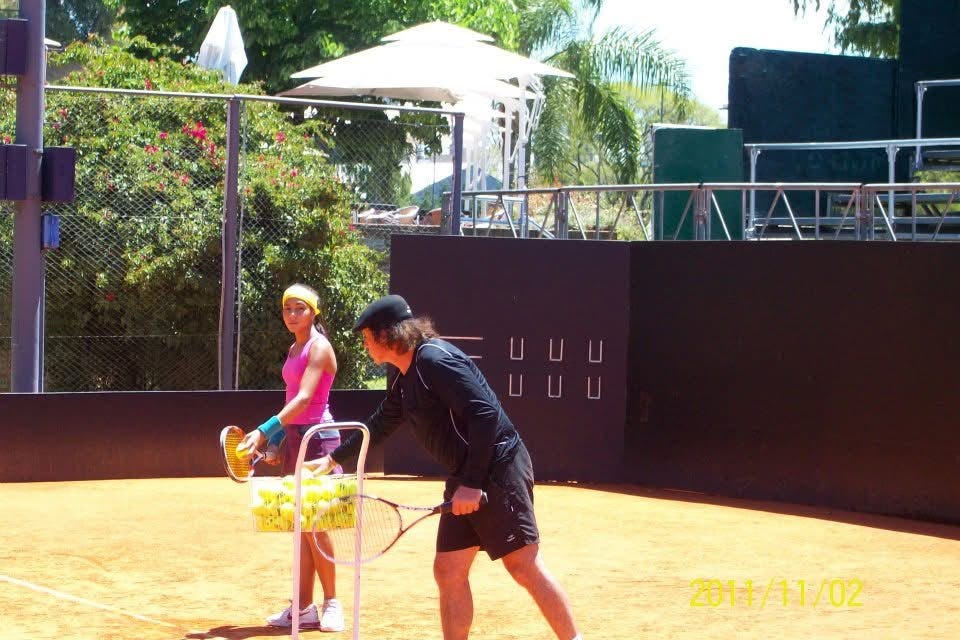
Canahuate Torres training with Guillermo Vilas, the four-time-Grand-Slam-winning Argentine and former World No. 1.
“Across a range of sports, American athletes are finding it harder to earn scholarships, roster spots and meaningful playing opportunities. Even highly accomplished junior athletes are increasingly asking whether the pathway that once existed for them is still there.”
NCAA college tennis teams have only so many roster spots and scholarships available, and most student-athletes coming through college don’t have wealthy families and often need the extra few years to mature — if they ultimately decide to go pro. And true, the number of international students on NCAA and other conference tennis teams has grown to 20,000 young men and women, but in NCAA Division I specifically, international players make up about 64 percent of men’s rosters and 66 percent of women’s rosters. The U.S. House Committee has framed the issue around whether the current system strikes the right balance between opportunities for American students and welcoming international athletes.
But it’s much more than “striking the right balance.” It’s about the founding mission of the United States as a “melting pot”, the unique system that is American college athletics and the specialised training higher education affords the tennis ecosystem around the world. However, I believe this is still a debate worth having. Not among politicians and policymakers, who constantly vie for votes and set policy based on flawed ideology, but among worldwide associations and university courts across America. Because I came to the United States as an international tennis player and I don’t believe limiting roster spots is the right solution.

China's Qinwen Zheng holding the China Open trophy against the backdrop of the Great Wall of China. Zheng is a product of the post-Communist embrace of tennis, left at a young age at a training centre in Wuhan, where Chinese great Li Na honed her game.
News Break… The Asia Swing + Post-Coke Comebacks
Chairman Mao loved sport. He loved Communism and hated elitists more.
Tennis actually came to China right around the era it arrived on the shores of America and Australia in the 1860s. Other than for the wealthiest families and the diplomats, however, lawn tennis remained relatively verboten. Enter Mao Zedong, who — during the Cultural Revolution — viewed tennis, golf and other “wealthy” sports as manifestation of the sins of the revisionists and the bourgeoisie. Other sports caught the eye of the Chairman: high jumping, long jumping, running and swimming, which could improve the people’s physiques and train them in skills needed for the armed revolution, as well as table tennis as a diplomatic tool. Mao promoted his brand of sport across all sectors and levels of society and made it front-and-center in the political and ideological propaganda of the CCP leadership,
Since the turn of the 21st-century, however, the popularity of tennis among the middle classes has exploded from less than two million in 2006 to nearly 20 million by 2021, the second largest in the world after the United States. Tennis fever started during the 2004 Athens Olympics when China won gold in women’s doubles with Li Ting and Sun Tiantian, followed by a bronze medal from Yan Zi and Zheng Jie at China’s home games in Beijing four years later. Tennis hit fever pitch when former WTA No. 2 Li Na won Roland Garros in 2011 and Wimbledon in 2014. Ten years later, enter Zheng Quinwen to become China’s first singles gold medallist and now — after two years of battling injuries, aiming for consistency, and falling down the rankings, the 23-year-old defeated Mirra Andreeva 7-5 6-4 to win the China Open in Beijing, capturing her first WTA 1000 title and becoming the first Chinese woman to take home the title. Chairman Mao’s embalmed body may have rolled over in his crystal coffin on the grand plinth of Beijing’s Chairman Mao Memorial Hall.

Nick Kyrgios delighting fan at the Kooyong Lawn Tennis Club Classic in 2026, where he’ll play again in 2027 after completing drug treatment and a one-month ban.
In other news, Nick Kyrgios has completed his one-month suspension and treatment program mandated by the International Tennis Integrity Agency (ITIA) for using cocaine two days before playing the Mallorca Championships and will mount his comeback at Australia’s Kooyong Classic in January. So far, the enthusiasm is mixed, especially after the outspoken Aussie has condemned other players, including ATP No. 1 Jannik Sinner for doping, saying that “Fairness in tennis does not exist.” Or does it not exist for anyone but Kyrgios? Britain’s Dan Evans tested positive for cocaine in 2017 and served a one-year ban, despite the ITIA accepting he had taken the drug several days earlier. But thanks to an appeal by Moroccan player Imran Sibille, who proved that he had taken cocaine to party and not performance enhance, the ITIA and World Anti Doping Agency changed its policy in 2021. So far, Evans has remained mum on the matter.
ASK THE “BUTTERY”:
Last week, Daniil Medvedev accidentally hit a man in the face with a ball, but feisty Frenchman Terence Atmane threw and smashed his racquet days earlier. How do the referees handle players who throw their racquets?

William Coles worked as a journalist for over 30 years, and in the past 15, has had 11 books published, including thinly veiled “novels’ related to his life, such as the tales of the Eton, Movie and Palace “Rogues.” An LTA-certified Chair Umpire, Coles recently released Wimbledon Rogue to notable acclaim.
Back to NCAA Tennis’ International Players…

Canahuate-Torres playing a singles match for Hofstra University on Long Island, New York.
For me, college tennis represented something much bigger than simply competing in more matches. It gave me a chance — after training day-in, and day-out since age four — to continue playing the sport I loved at an elite level, while pursuing my education and gaining the knowledge of a completely different culture than mine in Punta Cana, Dominican Republic. My years at Hofstra University in Hempstead, New York, helped shape who I am today, both as a person and as a tennis professional. Of course, I believe American juniors should have a shot at continuing to play tennis after high school. I also understand the reasons parents, coaches and former players may be concerned when talented American players struggle to find spots on college teams.
While I don’t dismiss Patrick McEnroe’s point of view, I disagree with the proposed approach on the table. If international players are increasingly earning roster spots, we should first ask why. College coaches are responsible for building competitive teams, and naturally, they will recruit players they believe can help those teams succeed — in fact, the livelihoods of those coaches depends on success, and success means winning matches.
If international athletes are consistently attractive recruits, restricting how many of them can participate may create more roster spots for Americans. But does it make American players better? I don’t believe it does. Rather, it increases the number of available American spots on teams without necessarily improving their acumen or readying them for the pro step, should they want to take it.
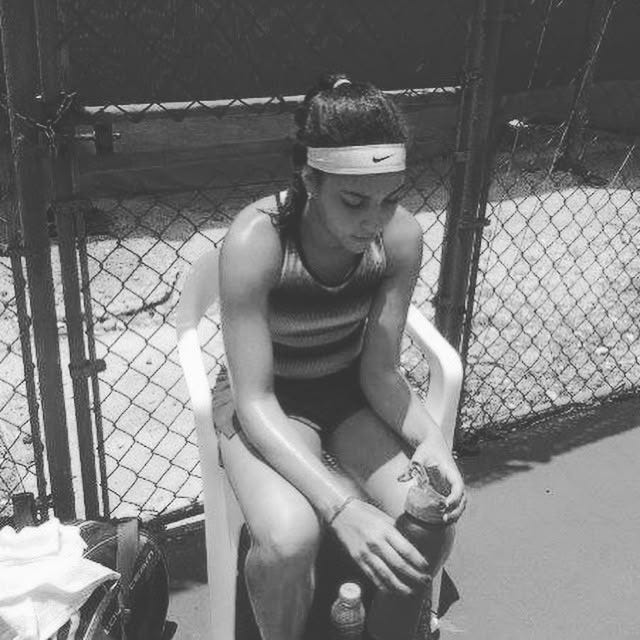
Canahuate Torres, a junior standout from Punta Cana, Dominican Republic, thinking about match strategy between points.
There is a more interesting question we should be asking: What can the United States learn from young players developed elsewhere? In most countries, tennis education and coaching remains deeply connected to clubs, academies and competitive structures that expose players to the sport from an early age. Different personalities and perspectives mean different approaches to training, which means different playing styles that can not only advance college teams, but also benefit novice American players. Moreover, most American players priming for college and above have already competed alongside international peers on a regular basis in ITF Juniors, practicing and traveling with them, and learning new approaches to the game from them. They almost have to have exposure to the ITF world before they can qualify for college tennis; if they haven’t had it yet, gaining it from international teammate could potentially help them on the international pro circuit.
The United States has tremendous tennis resources as well. But rather than focusing primarily on limiting international participation at a possible end of a player’s pathway, more attention should be placed on strengthening players’ core talent at the beginning of their potential careers. One of the best aspects of American college tennis is that it has become a place where talented players from around the world can compete together — at a team level — while receiving an education and gaining respect and knowledge from athletes of different countries and tennis backgrounds. That competition raises everyone’s level.
If commentators and pundits have concerns about age differences, previous professional experience, eligibility standards or recruiting practices, those issues deserve examination. But those conversations don’t necessarily have to begin with nationality. The Intercollegiate Tennis Association (ITA) could design rules to apply consistently to everyone.

Canahuate Torres in a montage of her time at the Guillermo Vilas Academy in her native Punta Cana, Dominican Republic.
At the same time, the U.S. already has specifically designed competitions and stepping stones for American players. In 2026, for example, the USTA again held its American Collegiate Player Wildcard Playoffs, providing American college players a pathway to earn US Open main-draw and qualifying wild cards. In 2023, the ATP and Intercollegiate Tennis Association (ITA) announced a groundbreaking collaboration called the ATP’s Accelerator Programme, giving players ranked inside the ITA’s season-end Top 20 or quarterfinalists at the NCAA Division I tournament eight Accelerator Spots at Challenger 50 and 75 tournaments, thereby skipping the grind of the ITF World Tour, aka The Futures. Lastly, for more than 50 years, World Team Tennis (WTT) has brought on promising young college players such as Brendon Nakishima, Danielle Collins and Emma Navarro spots to compete among pros of every stripe in a collegial and team atmosphere. No other countries have these kinds of stepping stonres.
Lastly, if America was truly concerned about too many international players in its collegiate system, perhaps the NCAA could export its know-how to other countries so they could form university teams of their own, thus keeping English players at say, Oxford, Cambridge or Durham; Canadian athletes at McGill University or the University of British Columbia; and Australian tennisheads at the University of Melbourne or University of Sydney. Instead of making our system less international, why not look at ways to export some of what makes it successful? Tennis federations, academies and booster organisations also have the ability to partner with institutions in Europe, Latin America and elsewhere through exchange programs, international collegiate competitions and educational partnerships that combine tennis and academics.
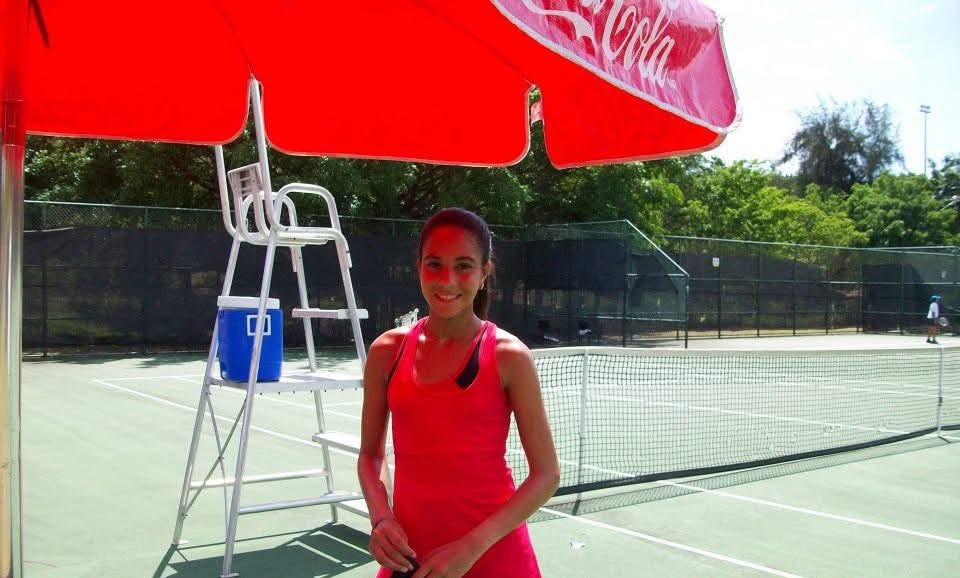
The author taking a training break at the Guillermo Vilas Academy in Punta Cana, Dominican Republic.
For me, however, this debate isn’t theoretical; it’s personal.
I was one of the international players who came to the United States looking for a break. I dreamed of being No. 1 in the world, but that didn’t happen and to be fair, it probably wasn’t going to happen for me. But playing NCAA tennis at Hofstra University allowed me to compete, study, live in and absorb a new country and meet people from global cultures. Hofstra became one of the most essential paths during my tennis journey.
All these aspects convince me that all of us in the tennis world must remain vigilent about not framing American and international players as being on opposite sides.I understand the desire to protect opportunities for young American athletes and I share the desire to see American tennis develop more great players. Don’t make American tennis competitors weaker by reducing the competition, however. And if the college tennis model creates windows that allow young athletes to dream bigger and pursue their ambitions, America should find ways to create more windows and doors and prepare them to compete with the best players, wherever those players come from.

Guillermo Vilas teaching a young Canahuate Torres how to dance during a post-match party.
In the beginning, playing college tennis, for me, looked like winning matches. Thinking back, however, Hofstra tennis gave me something much bigger than the dream I was chasing. It taught me how to lose and come back the next day; to stay disciplined when motivation wasn’t there; and to deal with pressure, disappointment and setbacks and keep moving forward anyway.
At the time, I thought I was training to become a better tennis player. I didn’t realize I was also training for life. I believe sport is so important at any age and any level for those very reasons; one doesn’t need to become a professional for athletics to change someone’s life. Sometimes the dream you started with doesn’t end up way you imagined. But that doesn’t mean the journey didn’t work out. Higher education — and college tennis — provides that lesson to everyone, regardless of country, race, economic circumstance or culture.
Ana Gabriela Canahuate Torres is a pro coach, hitter and fitness influencer based in lower Manhattan. She has also been a part of the U.S. Open tournament team for the past ten years, as well as involved in several tennis start-ups. Follow her on Instagram; @anagabrielactennis

The Serena Williams Barbie doll in the packaging, on the court and with its inspiration.
RALLY SMASHES/SHANKS
Serena Williams’ two daughters, Olympia and Adira River Ohanian, can take lessons from their mom on the family tennis court and admire her trophies in the Ohanian’s Florida home. Now, they have an additional chance to hang with mom off-court: playing with the new Serena Williams collectible Barbie that “represents her and the iconic legacy she’s built over the years” according to Essence magazine. On 8 October Mattel released the Serena Barbie, which comes with a miniature tennis racket, a tennis ball, a matching headband, socks, and shoes. Serena also comes dressed in the outfit in which she seized her seventh Grand Slam singles at the 2005 Australian Open by defeating Lindsay Davenport.
In a social media video released to market the doll, which is selling for £50 on various websites in the UK, Williams holds her custom doll, changes its kit and places her gear in a miniature, play-sized washing machine. But RALLY has one question before purchasing the new Barbie: does the doll comes with a plastic wildcard for entering matches without a ranking, or an add-on injured knee for skipping obligatory tournament pressers? Maybe future editions.
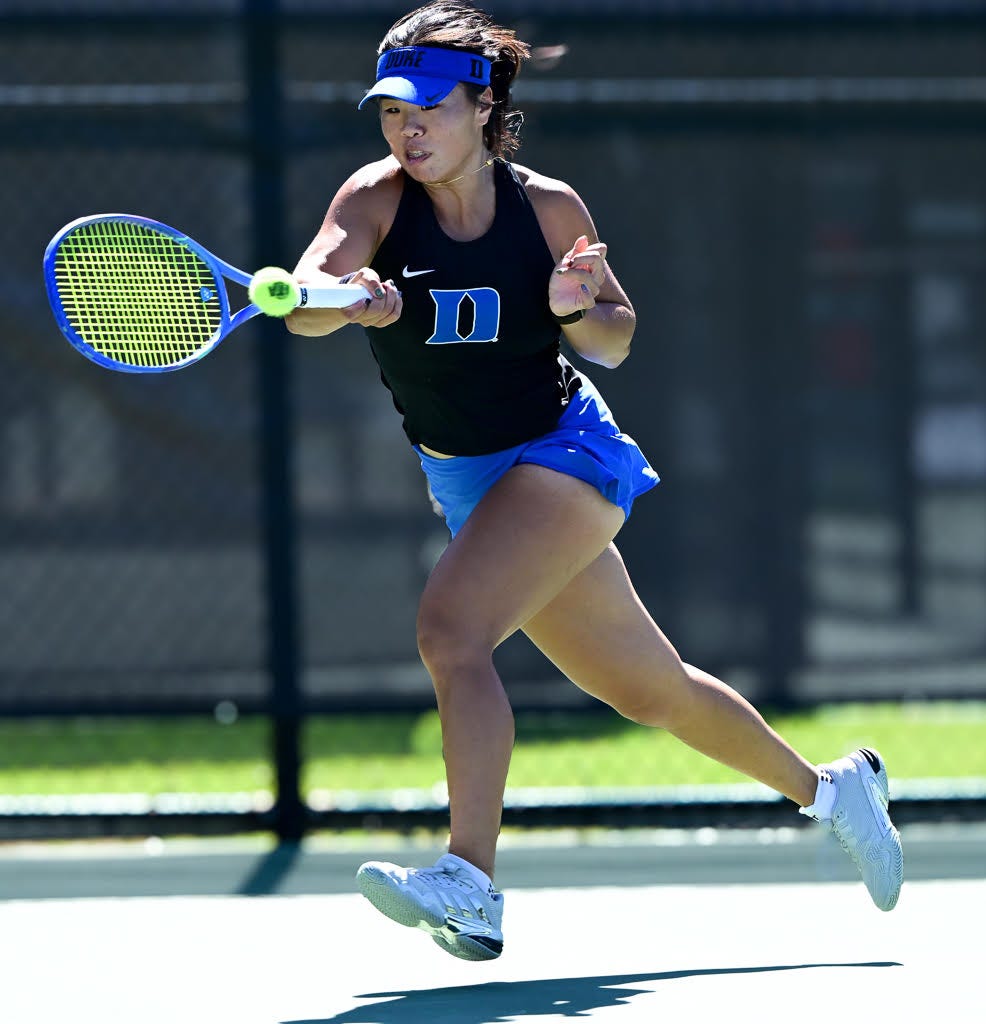
Mingge Olivia “Mimi” Xu playing a college match for Duke University in North Carolina. Photography: Rex Miller.
THE ALTHEA EFFECT x RALLY:
Mingee Olivia “Mimi” Xu, born in Swansea, Wales to Chinese parents, started playing tennis at the Swansea Tennis and Squash Club before moving to the Team GB National Tennis Academy in Loughborough followed by the National Tennis Centre in Roehampton, just outside London. Xu, 19, recently accepted a spot at Duke University
Rex Miller’s Notes from a Cinematographer:
I’ve been spending some time filming college tennis for a documentary series we’re developing.
One of the things I’m discovering is that every one of these high-level college players seems to be on a unique and interesting tennis journey.
Mimi Xu is from Wales and just arrived at Duke.
I first filmed her at a Duke practice, then planned to shoot one of her matches at the ITA All-American Championships in Cary.
She won. So I came back.
She won again. And again. And again.
Four matches against top college players, all the way to the final.
Mimi came into the tournament as a wild card, without any college results. But she certainly didn’t come out of nowhere. Last year, she received a wild card into Wimbledon, where she played US Open champion and fellow Brit Emma Raducanu.
Now she’s at Duke, beginning a very different chapter of her tennis life.
I had Mimi’s coach miked for the matches, so I spent as much time listening as photographing.
Where is she headed?
We don’t know.
There will definitely be a next point.
More on that later.
From “The Althea Effect”: What happens when somebody expands what’s possible?

Georgians Tennis and Padel Club in the Highgate Woods complete renovated its facilities and its programs to bring high-intensity training and Padel to North London.
TENNIS CLUB OF THE WEEK: Georgians Tennis Club, London
At the end of the Crouch End Playing Fields and wedged between the Highgate Tennis and Cricket Club as well as the Hanley Club, stands The Georgians Tennis and Padel club, as a modern tennis club featuring an advanced training academy for juniors, as well as a set of six brand new Padel Courts and an affordable cafe on site.
Long before Georgians existed, this area of Highgate woods in the late 1960s featured four basic red shale courts and a simple, unheated clubhouse. It was also associated or linked with local clubs like nearby Holly Park and when it officially incorporated in 2002, Georgians was originally known as the Georgians and Holly Park Tennis Club. But ownership changed hands several times, courts were leased and borrowed from nearby Highgate Club and Georgians went through a period of neglect as its membership dwindled and soon it became mostly a junior training centre and tournament site.
But in the past four years, Georgians has diversified under the dedication of Willem Cooper, an LTA R3 referee who revolutionised tennis competition through Cooper Events, which he founded at age 15. In 2024, his company ran 250 events across 10 venues, serving 25,000 players. Willem and partners took Georgians’ three artificial clay and one artificial grass court and turned it into the Middlesex Junior Training Centre, added four panoramic and competition standard outdoor padel courts, added a stand-alone cafe and pro shop, and brought in event nights, competitive tournaments and teams. It’s the only club in North London with Padel and Tennis and the only one left without a waiting list.



BY Ana Gabriela Canahuate Torres
READING TIME : 8 MINUTES
Related articles…
NCAA International Tennis Athletes v. the New Anti-Immigrant American Zeitgeist
Rally Report
BY Ana Gabriela Canahuate Torres
READING TIME : 8 MINUTES
Losing the Line Umpires + Ask the Buttery
Rally Report
BY William “Bill” Coles
READING TIME : 5 MINUTES
11 September 2026: 25th U.S. Open 9/11 Editon
Rally Report
BY Adrian Brune
READING TIME : 8 MINUTES
SEE ALL RELATED ARTICLES
Same author
NCAA International Tennis Athletes v. the New Anti-Immigrant American Zeitgeist
Rally Report
BY Ana Gabriela Canahuate Torres
READING TIME : 8 MINUTES
Losing the Line Umpires + Ask the Buttery
Rally Report
BY William “Bill” Coles
READING TIME : 5 MINUTES
11 September 2026: 25th U.S. Open 9/11 Editon
Rally Report
BY Adrian Brune
READING TIME : 8 MINUTES
SEE ALL ARTICLES BY THIS AUTHOR